Reiki
What is Reiki?
Guided Distant Reiki
What is Reiki
Reiki is a natural, gentle, and safe Japanese technique for deep relaxation and stress relief that supports overall well-being. As a form of energy healing, Reiki highlights the connection between the mind, body, and spirit, fostering a sense of harmony and balance. It works by supporting the body’s energy field (aura) and energy centers (chakras), treating the whole person. By promoting deep relaxation and energetic balance, Reiki activates and supports the body’s natural healing processes.
Reiki means “universal life force energy.” It is not a religion or a belief system. Everyone is born with this natural energy, which nourishes the mind and body. When our life force energy is low, we may feel mentally, emotionally, or physically depleted. When it is strong and balanced, we often experience greater calm, clarity, and overall well-being.
Reiki never causes any harm and it always works for the highest good of the recipient.
Many hospitals in the US even offer Reiki for chronic conditions to help ease anxiety and support healing for their patients.
What Reiki Can Help With
Many clients share that Reiki helps them feel calmer, clearer, and more balanced. While every experience is unique, Reiki may gently support emotional wellbeing by promoting inner peace, easing stress and anxiety, and encouraging a deeper sense of relaxation. Clients often report improved sleep, enhanced mental clarity, and a greater ability to navigate daily challenges with steadiness and focus.
Reiki may also support the body’s natural healing processes by boosting the immune system, balancing the digestive system, helping to release physical tension and restore energetic balance. Some people experience a renewed sense of vitality, improved resilience, and an overall feeling of harmony between mind and body. It can be especially supportive during times of transition, emotional overwhelm, or personal growth, offering a quiet space for grounding and self-reflection.
Many individuals choose Reiki as a complementary practice alongside conventional medical care, such as during post-surgical recovery or chemotherapy, to help ease the experience and support the body’s natural healing. During recovery from surgery, illness, or medical treatments, Reiki may help promote relaxation, reduce tension and discomfort, provide comfort, and support overall wellbeing. It may also help ease some side effects of medications and treatments, while supporting energy balance, focus, mental clarity, and a sense of harmony throughout the body, including chakra balancing. While Reiki is not a substitute for medical treatment, it can be a supportive addition to your holistic wellness journey.
What to expect during a reiki session
A Reiki treatment can be received in person with hands-on technique or it can be sent remotely.
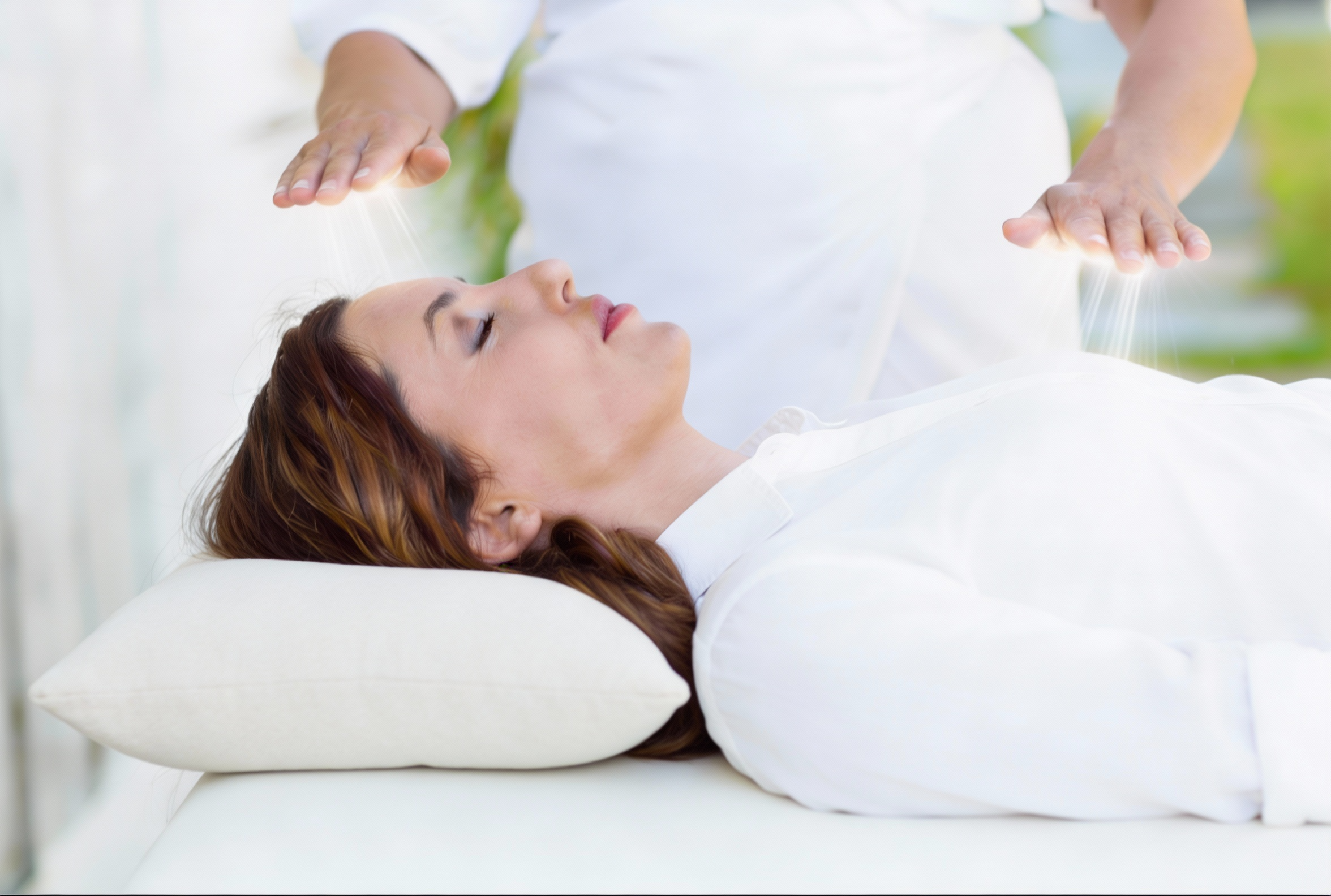
During an in-person Reiki session, you’ll lie comfortably on a massage table while fully clothed. The practitioner will gently place their hands either lightly on your body or just above it, moving through a series of positions to support energy flow and restore balance.
All you need to do is set your intention for what you want to heal or release, then relax and remain open to receiving the energy.
Many clients experience soothing sensations such as warmth, tingling, floating, or deep calm. Some also notice colors, images, or intuitive messages. By the end of the session, most people feel noticeably more calm, relaxed, and centered.
In a distance or virtual Reiki session, energy is sent without physical contact, allowing you to receive healing wherever you are. Energy is not limited by distance or space, so it can be channeled across any location. The effects and experience are the same as an in-person session. You receive Reiki from the comfort of your own home by relaxing in a quiet, comfortable space at the scheduled time while the practitioner channels Reiki through focused intention and visualization.